
Nikro Air Duct Cleaning in French Park: A Homeowner’s Guide
Most homeowners in French Park have never heard of Nikro, and that’s exactly why it’s worth knowing about. A shop-vac pulls roughly 100 CFM of suction. A Nikro negative-air machine moves up to 2,000 CFM. That gap isn’t a marketing line, it’s a performance number, and it decides whether a cleaning actually removes debris from the system or just stirs it around. When you book air duct cleaning in French Park, the equipment on the truck is the single most useful thing you can check before work starts.
What does Nikro equipment actually do that a shop-vac doesn’t?
A Nikro negative-air machine puts the whole duct system under vacuum before anyone touches a brush. That’s the mechanical difference. Instead of chasing dust with suction at the register, the machine pulls the entire air pathway into negative pressure, so when a technician agitates debris inside the duct, the loosened material travels toward the collection point rather than into your living room. The pressure holds the contaminants in the system until they’re captured.
Portable vacuum-based setups work differently. A brush-and-vac outfit agitates debris but generates far less suction, and without a sealed negative-pressure envelope, fine particulate can escape at gaps, seams, and open registers. On a light dust load you might not notice. On a French Park home with years of settled debris, pet hair, or renovation dust, the difference shows up in the air for days afterward.
- Negative-air capacity: Nikro machines move up to 2,000 CFM versus roughly 100 CFM from a shop-vac.
- Containment: the system stays under vacuum, so loosened debris has one direction to travel.
- HEPA capture: Nikro extraction units filter what they pull, which matters when the exhaust sits in a hallway.
- Reach: higher static pressure lets the vacuum hold through longer duct runs and multiple branches of a larger residential system.
The practical result is that source removal in French Park happens at the duct surface, not just at the register grille. Registers are the easy part. The trunk lines, branch runs, and plenum are where the real debris collects, and that’s the zone a genuine negative-air machine is built for.
Why HEPA filtration matters in French Park homes with allergy or asthma occupants
Suction without filtration is just a relocation service. When a vacuum pulls debris out of a duct, the air it exhausts has to go somewhere, and if that air isn’t filtered down to HEPA standards, fine particulate ends up back in the room the machine is sitting in. For a household with allergy or asthma occupants, that exhaust is the moment the whole job can go wrong.
Nikro’s HEPA-rated extraction captures particles at the sub-micron level that standard filters pass through. In our experience, the households that benefit most are the ones where a family member notices dust or musty air within a day of a cleaning. If they react to the exhaust plume, the equipment wasn’t running clean. The filtration stage is what keeps the work contained.
Contamination-sensitive jobs – mold spores, pest debris, heavy allergen loads – call for a step beyond HEPA capture. That’s where Abatement Technologies negative-air equipment comes in. It maintains containment-grade pressure in the work zone, which is the right setup when the debris load is high or a health concern is on the table. Not every French Park cleaning needs that level of containment, but the job should be matched to the load, not forced into one default tool.
Homeowners sometimes ask us whether the machine brand is a marketing detail. It isn’t. Filtration and negative pressure are the two numbers that decide whether the air in a French Park home improves or briefly gets worse before it settles. If you’d rather not gamble on that, call (833) 509-5212 for a free estimate.
How do you verify a contractor is actually running Nikro equipment correctly?
You don’t have to take the brand name on faith. A properly run negative-air job leaves a few visible signals, and asking about them tells you fast whether the technician knows the equipment or just owns it. Here’s what to watch for and what to ask:
- Access point placement. Proper access cuts are placed to reach trunk lines and branches, then sealed after. A technician cutting one hole per register and calling it done isn’t cleaning the system.
- Pressure readings. Negative-air machines have gauges. A technician who understands the equipment can tell you the pressure is holding and confirm the system is truly under vacuum, not running on hope and noise.
- Collection bag weight. What comes out is measurable. A heavy collection bag after a French Park job confirms real debris removal; a near-empty bag on a home with visible dust is a conversation starter.
- Before-and-after photos. Ask to see the duct interior before and after. A genuine negative-air cleaning produces a visible change, and a contractor should be glad to show it.
- Sealed register returns. Open registers during cleaning mean the vacuum is leaking. A careful technician seals them first.
The HVAC cleaning side runs the same logic. The coil, blower, and cabinet get cleaned while the negative-air machine holds the work zone, so debris doesn’t migrate back into the ductwork after the ducts are done. A contractor who cleans ducts but leaves the air handler alone has cleaned half the system.
Which jobs actually call for Nikro equipment, and when is something else the right tool?
Negative-air capacity pays off on larger residential systems, post-renovation debris, and heavy contamination. Those are the jobs where debris volume and duct length outrun what a portable vacuum can manage. A French Park home right after a kitchen or bathroom remodel carries drywall dust through every branch line, and the CFM headroom is what clears it instead of redistributing it. The same is true for long-running systems with settled debris built up over years.
Lighter jobs are different. A small system with modest dust and a routine maintenance interval may not need maximum negative-air pressure, and a technician who owns big equipment should still be honest about matching the tool to the load. Throwing a 2,000 CFM machine at a light cleaning isn’t thorough, it’s just loud.
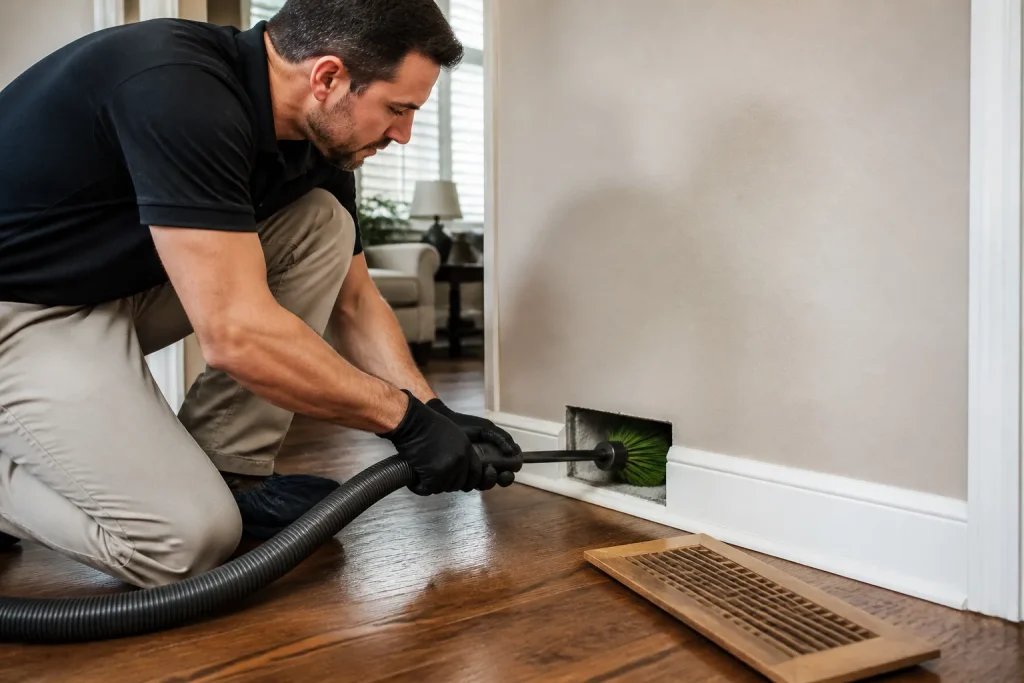
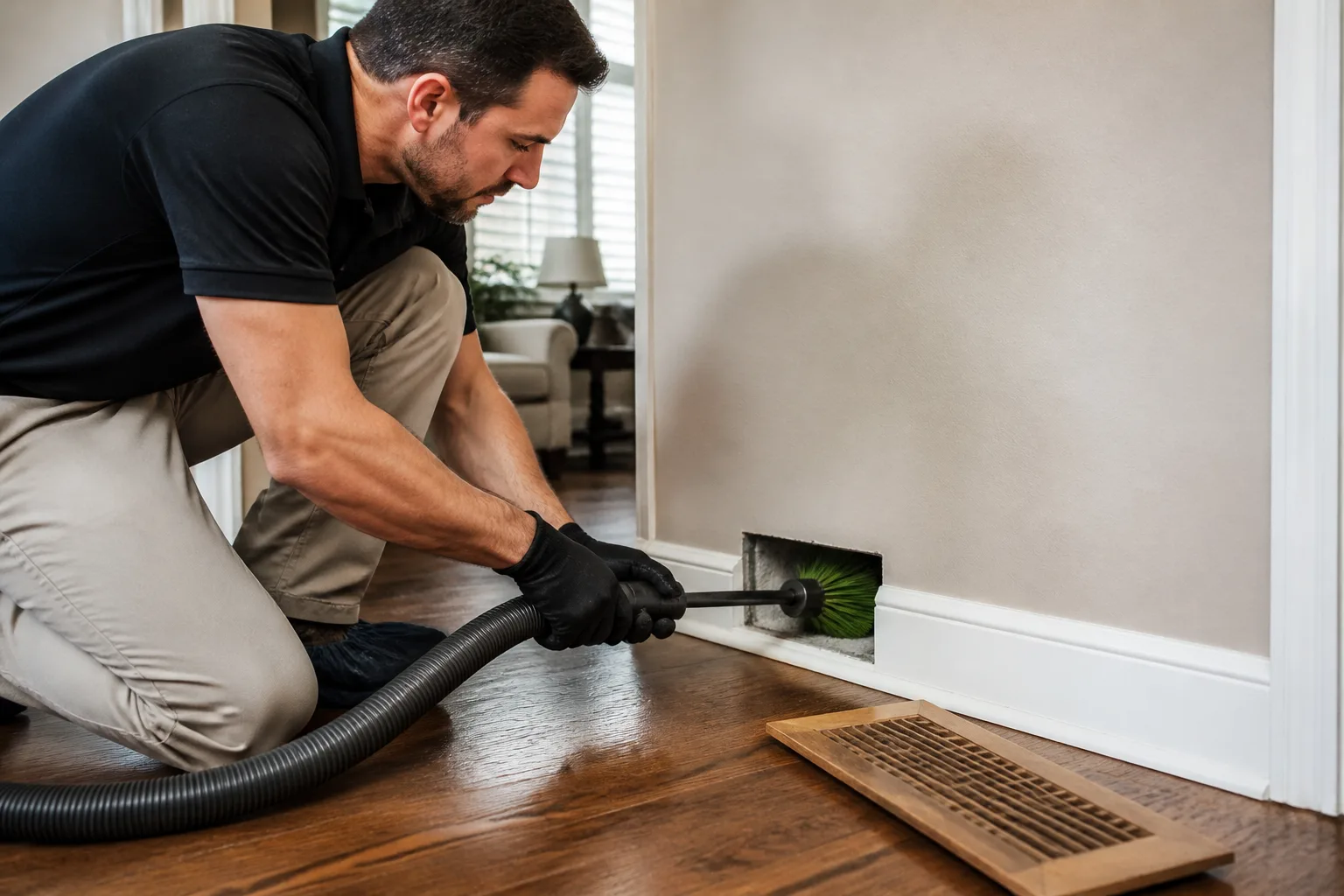
One tool deserves its own line. The Rotobrush rotary-brush extraction system agitates duct surfaces while vacuuming, and it’s what we run on every duct cleaning job regardless of the negative-air setup. The brush reaches the settled film on the duct wall that suction alone leaves behind; the Nikro machine captures what the brush loosens. Those two tools working together are the difference between a wiped-down exterior and a cleaned interior.
Where the load includes heavy contamination, mold, or an allergy concern, the Abatement Technologies containment equipment joins the setup to hold the work zone at proper pressure. Where the system has gaps, disconnected joints, or leaks, duct repair and sealing fixes the root cause so the next cleaning isn’t undone by re-contamination. We repair and seal what we find, right then, in the same visit.
When to call a pro: if the question is whether your system needs negative-air equipment or a simple clean, that’s a diagnostic call, not a DIY one. Likewise if you’ve had a renovation, a mold or moisture concern, or years of skipped cleanings. Call (833) 509-5212. We answer 24/7. Fast dispatch from 7am to 7pm, Sunday through Friday.
Related services in French Park: homeowners dealing with lint buildup and a slow-drying laundry room should look at dryer vent cleaning, and anyone upgrading filtration or humidity control can add Aprilaire or Honeywell air-quality products during the same visit, so the duct, the HVAC cabinet, and the filter all get handled once.
What should you ask any contractor about their equipment before booking?
Five questions cover most of it. The answers separate a technician who understands the equipment from a crew reading the same flyer you are:
- “What negative-air machine will you run, and what CFM does it move?” A real answer names the make and the pressure rating. A vague answer about “professional equipment” is a soft pass.
- “Is the extraction HEPA-rated?” If they can’t confirm filtration, the exhaust goes back into your room.
- “Will you agitate the duct surfaces, or just pull vacuum?” Suction alone misses the settled film. The brush matters.
- “How do you seal the work zone and the registers?” Containment is the whole reason negative-air equipment exists.
- “Can I see before-and-after photos of the duct interior?” A contractor with nothing to hide has a camera and uses it.
At the bottom of the list, a flat price per system agreed before work starts, along with the written estimate that sets the final price. If a contractor can’t promise a fixed price before the truck is unloaded, the equipment conversation hardly matters.
The Bottom Line
Nikro equipment is a performance specification, not a brand gimmick, and knowing its specs gives you a way to hold any contractor accountable in French Park. Negative-air pressure, HEPA-rated capture, and a rotary-brush agitating system working together are what turn a cleaning into source removal. Ask what machine they’ll run, confirm the filtration, ask about access cuts and collection, and require a flat price before the work begins. Our technicians have up to 10 years of experience, and we use Rotobrush and Nikro systems on the job along with Abatement Technologies containment when the load calls for it. If you’re in French Park and need help, Air Duct Cleaning French Park offers free estimates. Call (833) 509-5212 to book yours, or start with our Air Duct Cleaning French Park page for the full service menu. We answer 24/7. Fast dispatch from 7am to 7pm, Sunday through Friday, and we’re closed Saturday.
Frequently Asked Questions
Most French Park homes fall in an estimated range set per job by the written estimate, and the price depends on system size, how many branches and registers the house has, and how heavy the debris load is. We give one flat price per system before work starts, not a per-vent charge that grows once the technician is on site. Call (833) 509-5212 for an exact quote; estimates are free.
Cheaper quotes usually mean less equipment and less time. A crew running a portable vacuum and a brush may be able to move fast, but without proper negative-air pressure and HEPA capture, fine particulate can escape back into the home. The low price reflects the tooling. When you compare quotes, ask what CFM the machine moves and whether the extraction is HEPA-rated, then compare the price against the equipment. Call (833) 509-5212 if you’d like to compare our numbers.
Ask for before-and-after photos of the duct interior, confirm the collection bag weight when the job wraps, and ask the technician to show you the pressure reading while the machine is running. None of this requires a special inspection, and any contractor confident in the equipment should be comfortable handing it over. Call (833) 509-5212 to book a job where you can verify the work.
Most homes do fine with a cleaning every few years, but a renovation, a mold or moisture concern, visible dust at the registers, or a household with allergy or asthma occupants can call for it sooner. There’s no universal schedule; the load decides. If you’re not sure yours is due, call (833) 509-5212 and we’ll talk it through. We answer 24/7.
Written by the team at Air Duct Cleaning French Park.
Need Air Duct Cleaning Help?
Call Air Duct Cleaning French Park - the local pro we connect you with is licensed and insured, with free written estimates in French Park.
(833) 509-5212