
Last updated November 24, 2026
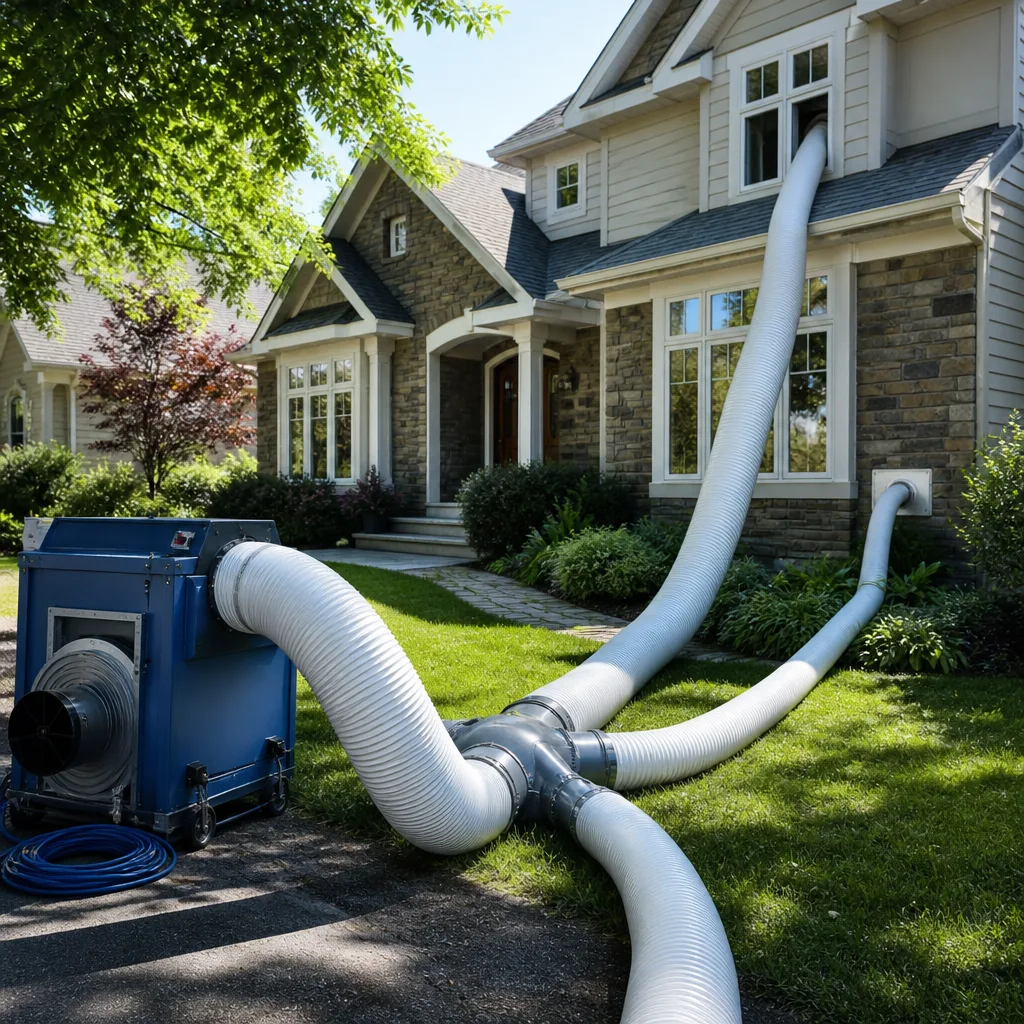 Whole-home duct cleaning
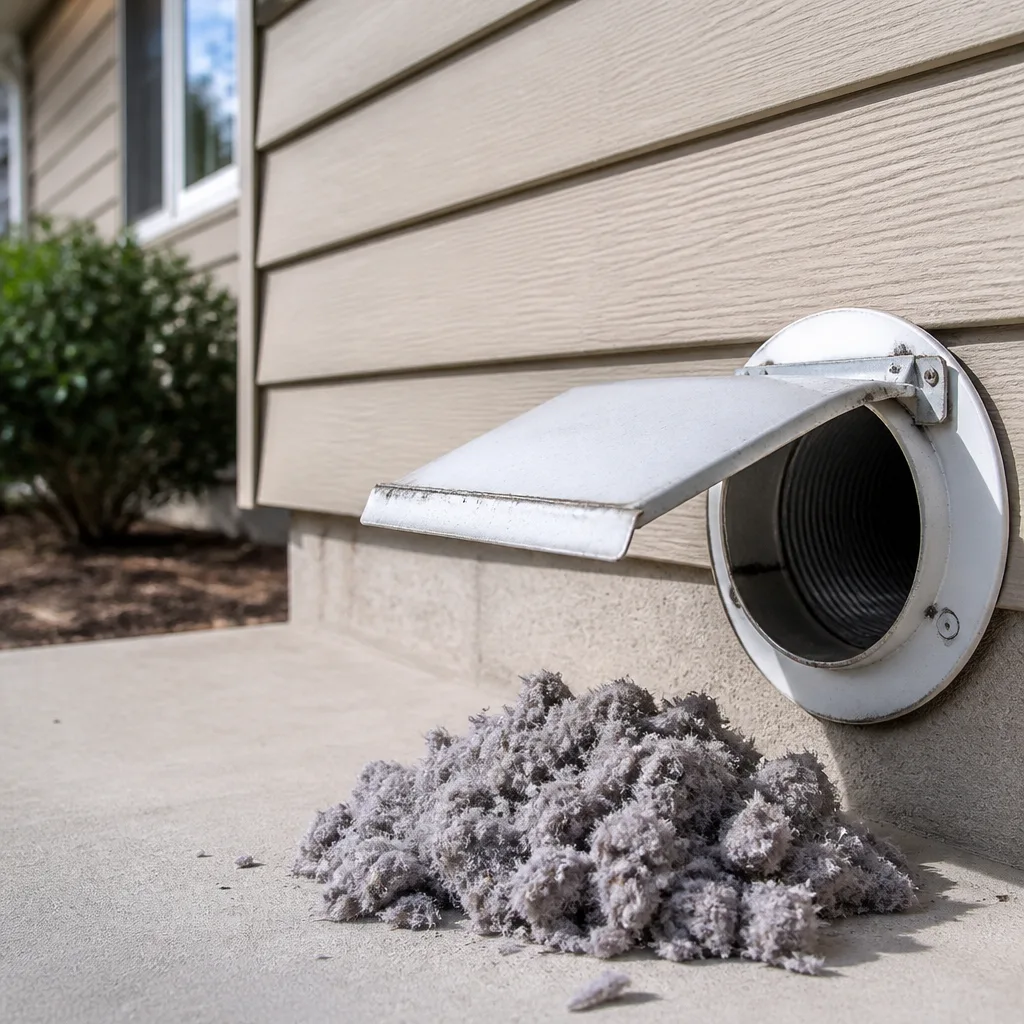 Dryer vent cleaning
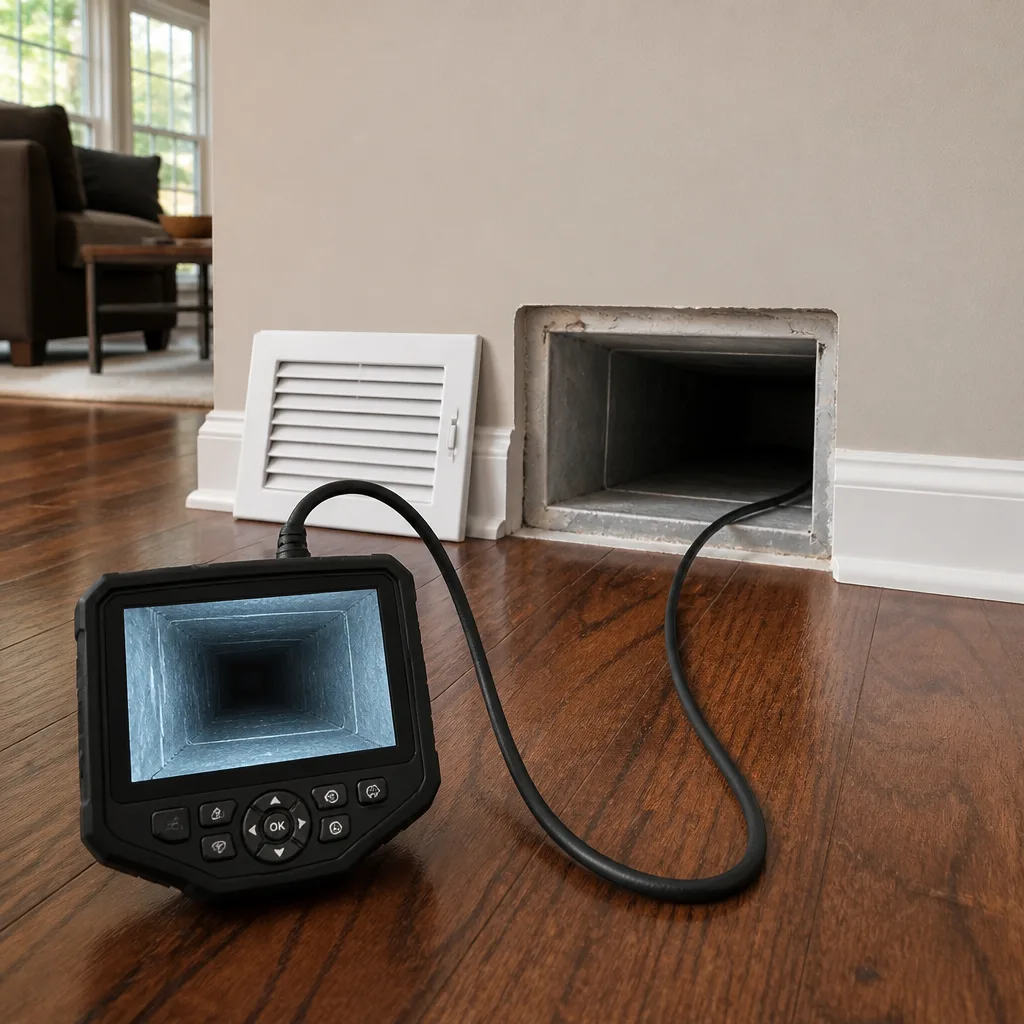 Camera inspection
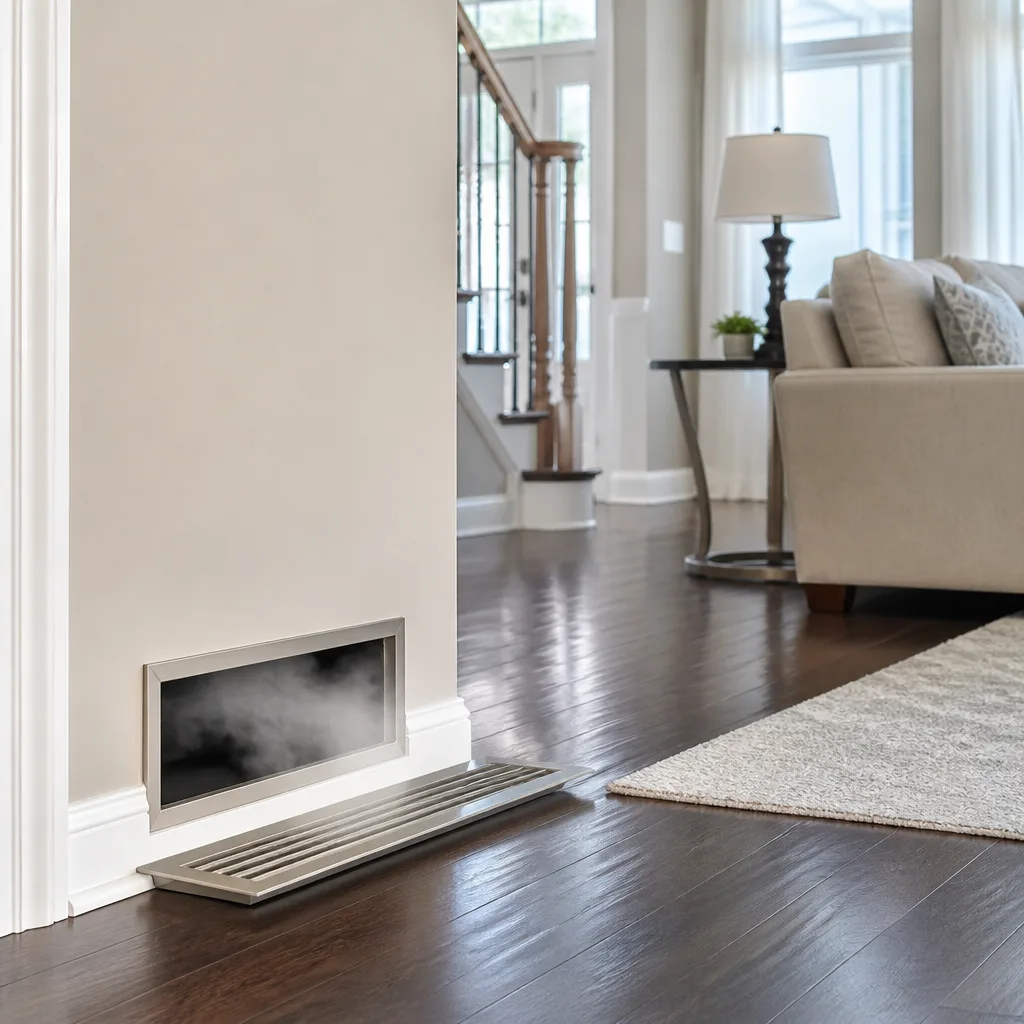 Sanitizing & deodorizing
Whole-system duct and dryer vent check with before-and-after photos - you see exactly what came out of your vents
That "$99 whole-house special" is a bait ad - the real number appears once they are in your hallway, or the "clean" is a shop-vac at the register. We photograph the inside of your ducts before and after instead.
Air Duct Cleaning Troubleshooting in French Park: Common Problems and How to Fix Them
If your upstairs rooms stay 5°F warmer than downstairs after a cleaning, the cleaning didn’t fail. Your duct system was never what the cleaning addressed. This is the most common misunderstanding we run into in French Park: homeowners treat a duct cleaning as a cure-all, then feel let down when uneven temperatures, lingering odors, or fast-returning dust persist. Those symptoms rarely come from dust alone. Each one traces back to a specific duct fault, and each fault has its own fix. This guide maps the symptoms you notice to the causes a technician can trace, explains the diagnostic sequence that should happen before any cleaning tool goes into your ducts, and shows where cleaning, sealing, or rebalancing is the actual answer. We’re writing this from French Park, where older ranch homes with attic runs create their own set of problems.
Quick Answer
Most air duct complaints in French Park come from duct faults, not dirt: leaks in attic runs, collapsed or disconnected flex duct, blocked branches, and negative pressure imbalances are the usual culprits, and they are diagnosed before cleaning, not after. A credible technician inspects the system with a camera first, reads pressure and airflow, and then decides whether the job calls for cleaning, sealing, duct repair, or a combination. Air Duct Cleaning French Park follows that sequence on every job and offers free estimates.
Styles & brands we work with
- Whole-home duct cleaning
- Dryer vent cleaning
- Camera inspection
- Sanitizing & deodorizing
Table of Contents
- Symptom-to-Cause Mapping: What Each French Park Complaint Actually Means
- The Correct Diagnostic Sequence Before Any Cleaning
- Dirty Ducts or Dirty Coil? How to Tell Before You Call
- Why Cleaning Alone Won’t Fix Negative Pressure
- French Park’s Attic-Run Problem: Older Ranch Homes and Leakage
- Persistent Odors: Tracing Source Before Treating
- Why Dust Comes Back So Fast
- High Energy Bills: Duct Leakage vs. Equipment Failure
- Common Mistakes to Avoid
- When to Call a Professional
- Frequently Asked Questions
Symptom-to-Cause Mapping: What Each French Park Complaint Actually Means
Every complaint about air ducts falls into one of four buckets: airflow, odor, dust, or cost. Each bucket points to a different family of faults, and confusing them is what sends homeowners down the wrong repair path. Here’s how the mapping works in practice.
- Uneven airflow (some rooms strong, others weak): usually a branch-level issue. A disconnected flex run, a crushed section under a floor joist, a damper stuck closed, or a return that’s too small for the room’s supply. Cleaning doesn’t fix any of these.
- Persistent odors (musty, chemical, “old house” smell): usually a moisture, biological growth, or contamination issue inside the air pathway, sometimes originating at the evaporator coil or drain pan rather than the ducts themselves.
- Dust reappearing fast: often a filtration problem, a return-side leak pulling attic or crawl air into the system, or a blower wheel that’s coated in debris and redistributing it with every cycle.
- High energy bills without comfort gains: usually leakage in unconditioned space, which in French Park most often means the attic runs on older ranch-style homes.
In our work across French Park, we’ve found that the most common misdiagnosis is treating a duct-system fault as an HVAC equipment failure. A homeowner hears weak airflow, calls for an HVAC service, and the equipment checks out fine. The system really is moving air; the ducts just aren’t delivering it where it needs to go. Naming the symptom correctly before anyone arrives saves time and steers the visit toward the right tool. A camera inspection and a pressure reading tell you more in fifteen minutes than an hour of guessing. That is the point of mapping symptoms: the complaint you notice is a starting clue, not a diagnosis, and the technician’s job is to trace it to a cause before touching a cleaning machine.
The Correct Diagnostic Sequence Before Any Cleaning
A credible technician follows a fixed order of operations. Cleaning comes last, never first. This is the sequence Air Duct Cleaning French Park uses on every job, and it’s the sequence you should expect from anyone you hire.
- Intake interview. Where are the problem rooms? When did it start? Was any work done recently? Has anything changed with the HVAC equipment?
- Static pressure and airflow readings. Measuring system pressure before and after the filter and coil tells you whether the system is starved or overpressured. This is where negative pressure imbalances become visible.
- Camera inspection of the trunk and branch runs. A borescope reveals collapsed flex duct, disconnected joints, debris accumulation, and contamination sources a flashlight-and-mirror guess can’t reach.
- Return-side check. Most French Park homes have fewer returns than they should. Verifying return sizing and sealing tells you whether the system is pulling air from the attic, crawl, or garage instead of the living space.
- Coil and blower inspection. A dirty evaporator coil or a fouled blower wheel mimics dirty ducts but requires a different service.
- Written scope and price. Everything above produces a written scope of work, and you agree to the price before any cleaning begins.
- Cleaning with professional-grade equipment. Only now does the agitation-and-extraction sequence begin, using a rotary-brush system and HEPA-rated vacuum so particulate is captured, not redistributed.
If a contractor skips straight to a cleaning quote without a camera inspection or pressure reading, that’s the wrong sequence. In our experience in French Park, most “we cleaned your ducts and nothing changed” complaints trace back to a skipped diagnostic step, not a bad cleaning. The inspection is the difference between treating what’s actually wrong and treating what’s easy to sell.
Dirty Ducts or Dirty Coil? How to Tell Before You Call
Dirty ducts and a dirty evaporator coil produce overlapping symptoms, but the fix is different and the cost is different. Here’s how to tell them apart in your own French Park home.
Dirty ducts usually smell worst when the system first kicks on, then level off. The dust in the registers looks like the same dust on your furniture. A camera will show debris sitting in the trunk and branch runs. A dirty coil usually produces a musty smell that gets worse the longer the system runs, especially on cooling cycles, because moisture is collecting where it shouldn’t. You may see water stains near the air handler, and the smell gets stronger in humid weather.
- Smell test: worst on startup = ducts. Worst after 20+ minutes of running = coil or drain pan.
- Visual check: uniform gray dust at registers = ducts. Dark staining near the air handler = coil.
- Sound test: rattling or whistling = duct issues. Sloshing or gurgling = drain pan or condensate.
- Filter test: filter loads up fast with the same dust = return-side leak or dirty blower. Filter loads slowly but the air still smells = coil.
A dirty blower wheel is the sneaky third option. A wheel coated in dust moves less air, and less air means every complaint above gets worse. That’s why HVAC cleaning covers the coil and blower along with the cabinet, while a duct cleaning alone won’t touch them. If you’re not sure which symptom belongs to which part of the system, don’t guess. A short inspection tells you in minutes what an afternoon of DIY investigation won’t. Call (833) 509-5212 to book one.
Why Cleaning Alone Won’t Fix Negative Pressure
Here’s the least intuitive troubleshooting rule in this trade: a house can have sparkling clean ducts and still deliver poor comfort and high bills if the system is running under negative pressure. Cleaning doesn’t touch that problem. Sealing or rebalancing does.
Negative pressure happens when return air volume exceeds supply air volume, or when the return is pulling from a space that isn’t conditioned living area. In French Park, older ranch homes often have undersized returns, so the system compensates by pulling air through gaps and joints in the supply ductwork in the attic. That pulls hot attic air into the system, which shows up as weak comfort and electricity bills that don’t match the thermostat setting. You can clean the ducts endlessly and the leakage remains.
The fix sequence is:
- Measure. Static pressure readings on the return and supply sides reveal the imbalance.
- Locate the leaks. A camera and a smoke test identify the joints and seams pulling attic air.
- Seal the leaks. Sealing the duct joints and seams restores the intended pressure relationship.
- Recheck. Static pressure is re-read after sealing to confirm the fix worked.
That’s where air duct cleaning in French Park broadens into duct repair and sealing. We repair and seal what we find, right then, because cleaning alone leaves the root cause in place. In our experience, homes with chronic negative pressure show the least improvement from cleaning alone and the most from sealing plus cleaning done in the right order. If your complaint is uneven comfort or cost rather than dust, ask about sealing before you schedule cleaning.
French Park’s Attic-Run Problem: Older Ranch Homes and Leakage
French Park’s housing stock is a big part of the troubleshooting story. Many of the single-story ranch homes that make up much of the neighborhood run their ductwork through the attic, which is unconditioned space. That single design detail is behind a large share of the airflow, comfort, and energy complaints we hear about.
In short: any air that leaks out of an attic run is replaced by air the system has to cool from scratch, and any air that leaks in from the attic is hot. Both directions of leakage cost you money. Cleaning can’t seal joints. Sealing can. A duct repair and sealing service closes the joints, reconnects disconnected flex runs, replaces crushed sections, and checks the attic-side insulation around the ductwork so the leakage opportunity is reduced.
Attic runs also age faster than conditioned-space ductwork. The heat cycling and the occasional pest access mean joint tape fails and flex connections loosen over time. That isn’t a cleaning issue. It’s a repair issue, and it’s the reason we offer air duct cleaning and sealing as separate, sequence-aware services rather than a single packaged visit.
If you live in a French Park ranch home and your complaints are comfort or cost rather than dust, ask the technician to look at the attic runs first. If the complaint is dust, ask for a camera inspection and a return-side check. Sitting in a different problem-solving track from the start saves you a service visit.
Persistent Odors: Tracing Source Before Treating
Odor is the hardest complaint to troubleshoot remotely because the source can be in three different places: inside the ductwork, at the evaporator coil, or in the space the return pulls from. Treating the wrong location wastes the service.
- Source inside the ducts: mold or biological growth, often where a leak introduced moisture. Treating this needs containment-grade cleaning, not a standard sweep.
- Source at the coil or drain: biological growth on the evaporator coil fins or standing water in the drain pan. Cleaning the ducts won’t touch it.
- Source at the return: a return pulling air from a musty attic or crawl space, or a return branch connected to a poorly sealed wall cavity.
The sequence is source, then treatment. A camera inspection inside the ductwork, plus a coil and drain pan check, settles which location you’re dealing with. Only after the source is identified does a sanitizing treatment make sense, and it’s applied to duct interiors as the last step, not the first.
For mold and allergen scenarios specifically, Air Duct Cleaning French Park uses Abatement Technologies negative-air equipment. That creates containment-grade cleaning so contaminants are captured, not pushed elsewhere. This matters more in homes with allergy-sensitive occupants, and more in French Park homes where humidity swings make coil-area moisture a recurring factor. If an odor returns after a generic cleaning, the source was never diagnosed. Call (833) 509-5212 and ask for a source-tracing inspection.
Why Dust Comes Back So Fast
Fast-returning dust after a duct cleaning almost always points to one of four issues, and none of them are “the cleaning didn’t work.”
- Filtration is undersized or wrong. A cheap filter with a low rating lets fine particles pass and coats the interior of the ducts, blower, and coil.
- Return-side leaks. Gaps in the return ductwork pull unfiltered attic or wall-cavity air into the system, skipping the filter entirely.
- A dirty blower wheel. A fouled wheel redistributes dust with every cycle, and no amount of duct cleaning clears that.
- Recontamination from the source. When the root cause is a leak or missing seal, debris keeps entering through the gap after cleaning.
Upgrading filtration is a real fix when the equipment is undersized for the home. Honeywell and Aprilaire filtration products install inline at the air handler, and because our service offering includes installing both, the filtration upgrade and the cleaning can happen on the same visit. That’s the cleanest way to prevent dust from coming back: fix the filtration and seal the return path before cleaning stops mattering.
If you’ve already paid for a cleaning and saw dust return within a month, the diagnosis was wrong, not the cleaning. Duct repair and sealing is the right service for the return-side leak, and a filter upgrade handles the rest. Call (833) 509-5212 and ask for a return-side inspection.
High Energy Bills: Duct Leakage vs. Equipment Failure
Before we get to the answer, here’s the split: if bills are high but comfort is fine, the system is probably running longer than it needs to because it’s working harder, and the usual cause is duct leakage in unconditioned space. If bills are high and comfort is poor, leakage or an equipment fault is more likely. If bills are high and the system runs all day, negtive pressure or a stuck damper can be the cause.
The correct diagnostic step is to isolate the variable. A technician records static pressure at the air handler and at several registers, then compares. Large differences between the two indicate duct leakage. Similar readings indicate the equipment itself. If the equipment checks out, sealing is the fix. In French Park’s ranch homes, the attic-run scenario from earlier is the most common answer.
- Bills up, comfort fine: duct leakage is the top suspect.
- Bills up, comfort poor: leakage plus possible equipment fault; test both.
- Bills up, system running all day: check for negative pressure and stuck dampers.
The framing point: this isn’t a “cleaning solves it” problem, it’s a “diagnose before treating” problem. Cleaning improves air quality and removes built-up debris, but it does not restore lost efficiency in leaking ducts. Duct repair and sealing does. The two services run in a sequence: inspect, diagnose, clean what needs cleaning, seal what’s leaking, sanitize if a source is found. Every step in that sequence has to be decided by what the inspection shows. Our technicians have up to 10 years of experience making that call, and we’re ready to make it in your home. Call (833) 509-5212 for a free estimate.
Common Mistakes to Avoid
- Skipping the camera inspection. Booking a cleaning without a camera inspection is treating the symptom before diagnosing the cause. In French Park’s older ranch homes, the camera is what reveals a collapsed flex run that no cleaning can fix.
- Assuming cleaning fixes airflow complaints. If a room is too warm or too cool, the fault is almost always a branch-level blockage, a crushed section, or a damper issue. Cleaning the ducts doesn’t rebalance the system; sealing and rebalancing does.
- Buying a duct cleaning without sealing the returns. Cleaning and then letting unfiltered attic air re-enter through a return-side leak wastes the money spent. The leak should be identified and addressed in the same service.
- Ignoring the blower wheel and coil. A dirty blower redistributes dust and mimics every symptom you’re trying to solve. Ask for the coil and blower to be inspected as part of the visit.
- Treating odors with sanitizing alone. A Guardsman treatment applied without finding the source inside the duct, at the coil, or at the return just hides the problem temporarily. Diagnostic first, then any sanitizing step.
- Accepting a quote that treats “per vent” as the price. A whole-system estimate should reflect the actual work the system needs, not a count of registers. In our work in French Park, whole-system estimates produce fewer surprises.
- Scheduling cleaning for an energy-bill problem. High bills are usually leakage, and leakage is a sealing job. Cleaning helps air quality; sealing helps efficiency.
When to Call a Professional
Call a professional when any of the following is true in your French Park home: the smell or dust returns within a month of cleaning, a room stays noticeably warmer or cooler than the rest of the house, you’ve noticed an odor that gets stronger the longer the system runs, your electricity bill has risen without a change in habits, or you’ve recently painted, remodeled, or moved into a home with unknown duct history. These are all diagnosis-first scenarios, and a free estimate lets you get a real answer before spending money on a cleaning that may not address the actual fault. Air Duct Cleaning French Park follows the full inspect-then-clean sequence and uses professional-grade equipment from Rotobrush, Nikro, and other manufacturer lines on every job.
Call (833) 509-5212. We answer 24/7. Fast dispatch from 7am to 7pm, Sunday through Friday. Free estimate before any work begins.
Frequently Asked Questions
There is no fixed per-vent rate that honestly reflects the work, so we quote per whole system based on what the inspection shows. Pricing depends on the number of systems, the size of the ductwork, whether a coil or blower cleaning is included, and whether sealing or sanitizing is needed. The written estimate sets the final price and you agree to it before any cleaning starts. Call (833) 509-5212 for an exact quote; estimates are free.
Usually because the cheaper quote is only a cleaning and skips the diagnosis, or uses less capable equipment that agitates debris without capturing it. A quote that looks low can end up costing more when the actual problem (a leak, a crushed run, a fouled coil) never gets addressed and the complaint returns. Comparing scopes tells you more than comparing prices: ask what equipment is used and whether a camera inspection is included. Call (833) 509-5212 to compare against our written scope.
Ask for before-and-after photographs of your own ducts. That’s the simplest verification, and it’s standard on our jobs. Also ask for the static pressure readings taken before and after the service, because they show the effect of the work rather than just its presence. If a contractor can’t produce either, treat the invoice as unverified. Call (833) 509-5212 and ask for a photographed estimate.
For most French Park homes, the honest answer is: when the diagnosis shows it’s needed, not on a fixed clock. Homes with pets, recent remodeling, occupants with allergies, or a history of moisture in the system get more frequent attention than a household with clean filtration and sealed ducts. A camera inspection every few years is a more reliable guide than a marketing schedule. Call (833) 509-5212 and we’ll inspect before we recommend anything.
No, and we say that directly because it’s the single biggest source of misunderstanding. Uneven temperatures are a duct-system problem: disconnected or crushed branch runs, a closed or stuck damper, or an undersized return. Cleaning removes debris but doesn’t deliver air to the right rooms. Sealing, repair, and rebalancing do. Call (833) 509-5212 and describe the room, and we’ll route the visit correctly.
Diagnose first, then clean the system, then repair and seal what the inspection found, then sanitize if a contamination source was identified. Sealing before cleaning traps debris; sanitizing before diagnosing hides the source. The sequence matters more than the individual service quality. Call (833) 509-5212 and we’ll walk you through the order that fits your system.
We answer 24/7. A call outside dispatch hours is booked into the next opening, Sunday through Friday, 7am to 7pm. We’re closed Saturday. Call (833) 509-5212 and we’ll get your inspection on the calendar.
See the difference
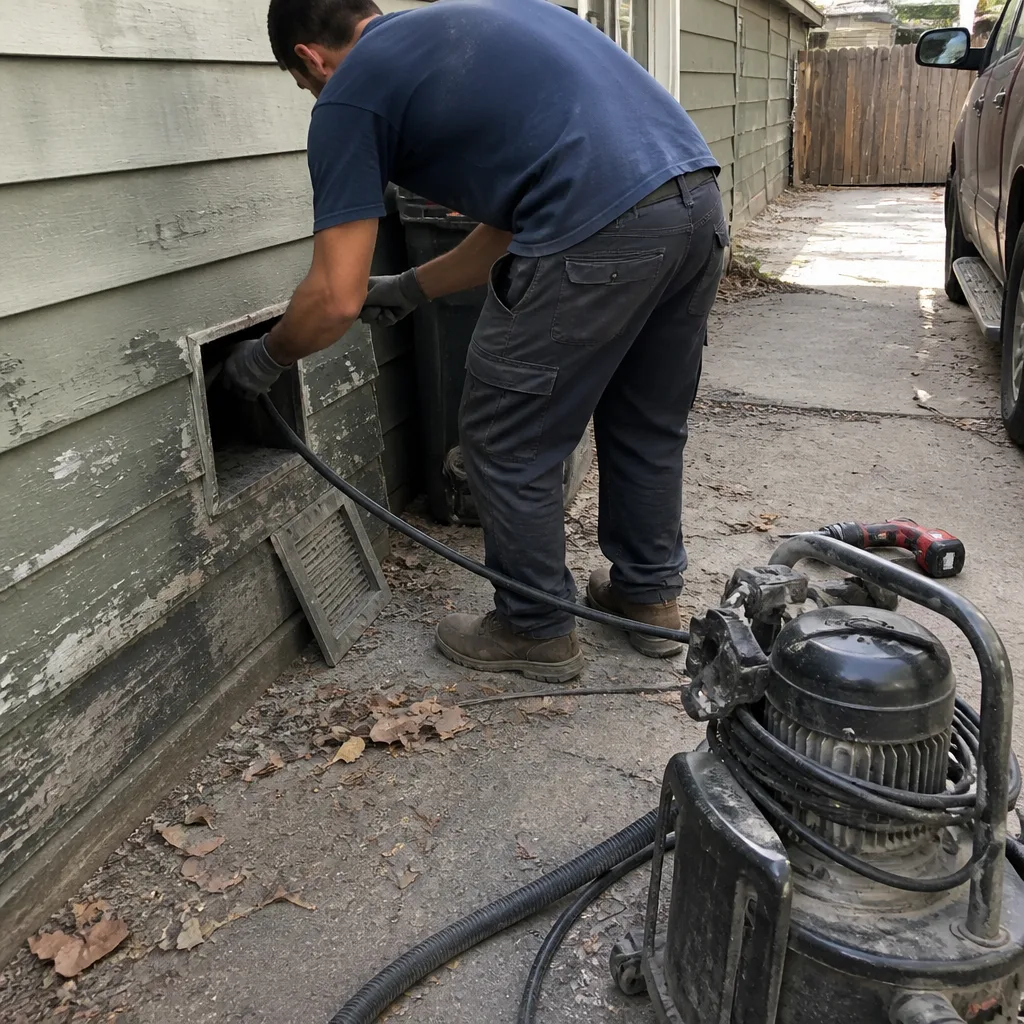 Before
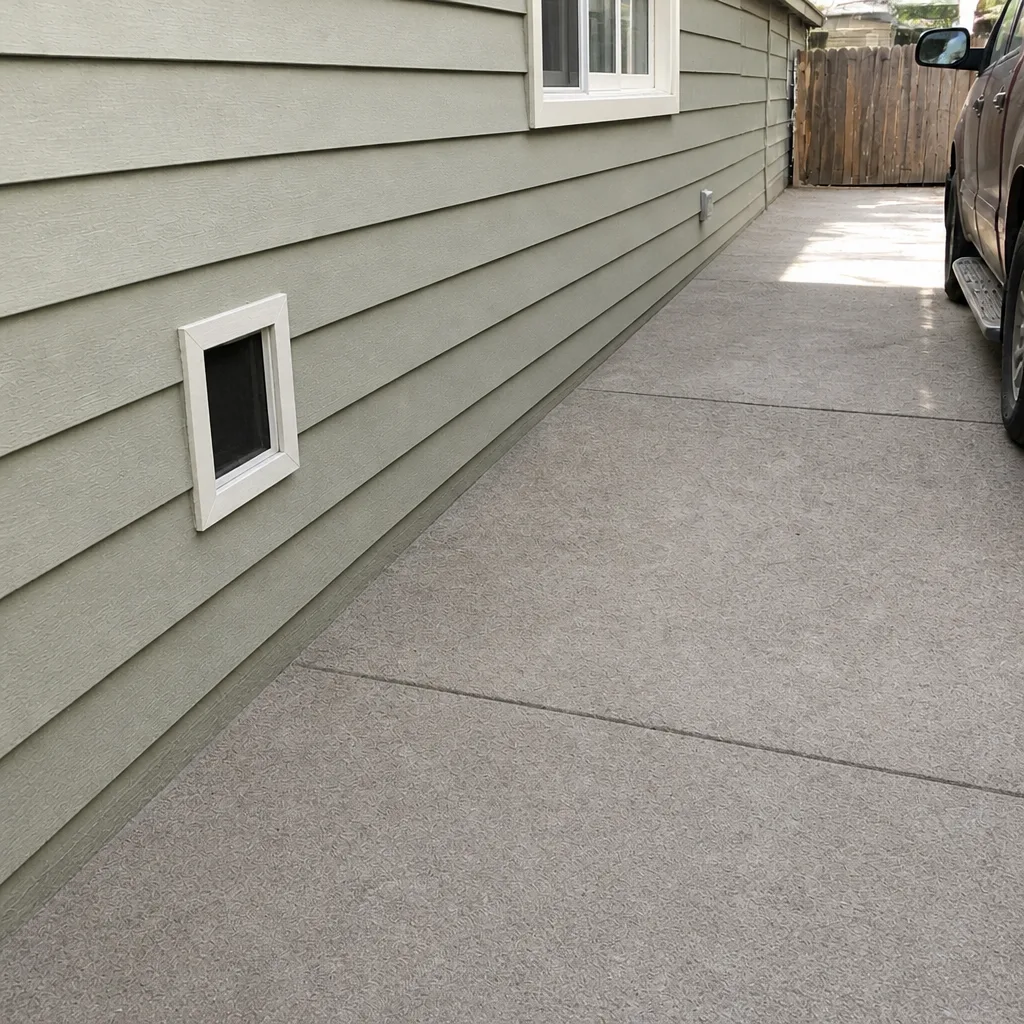 After
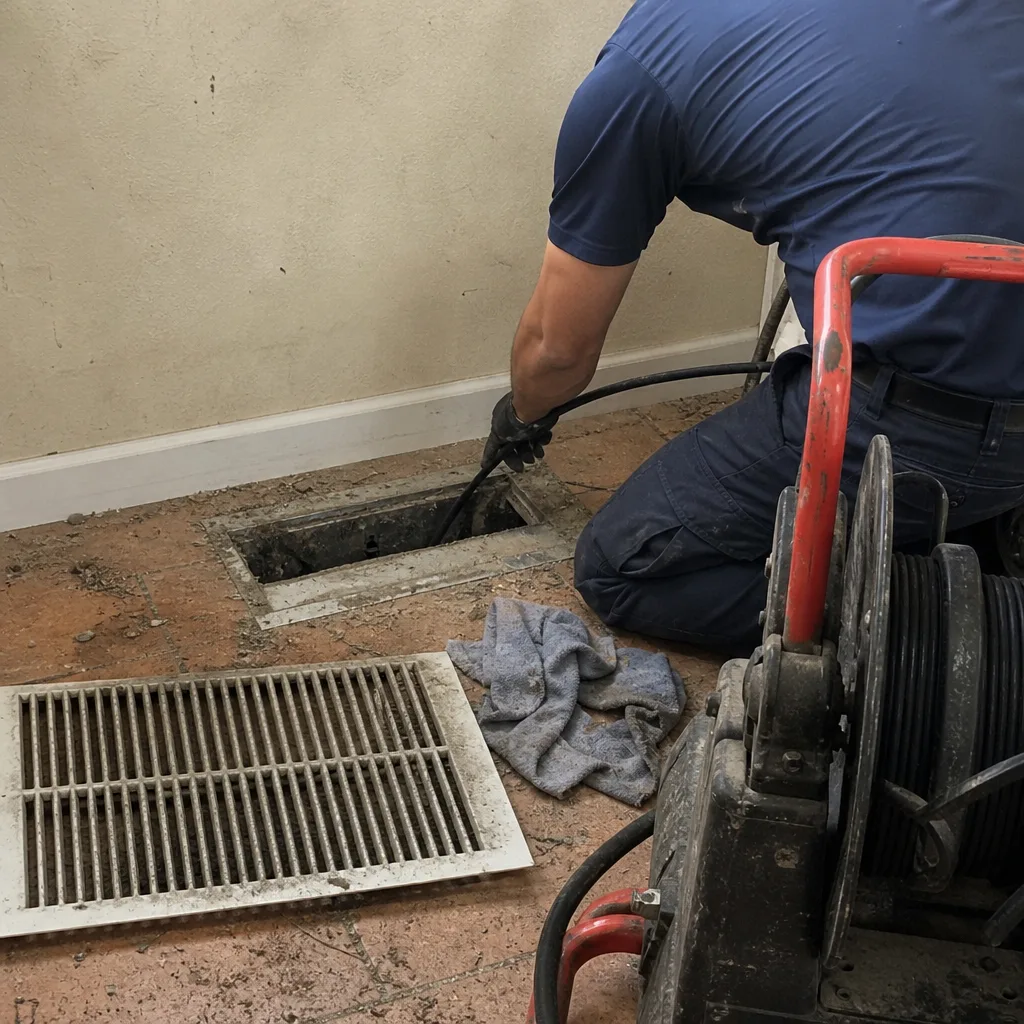 Before
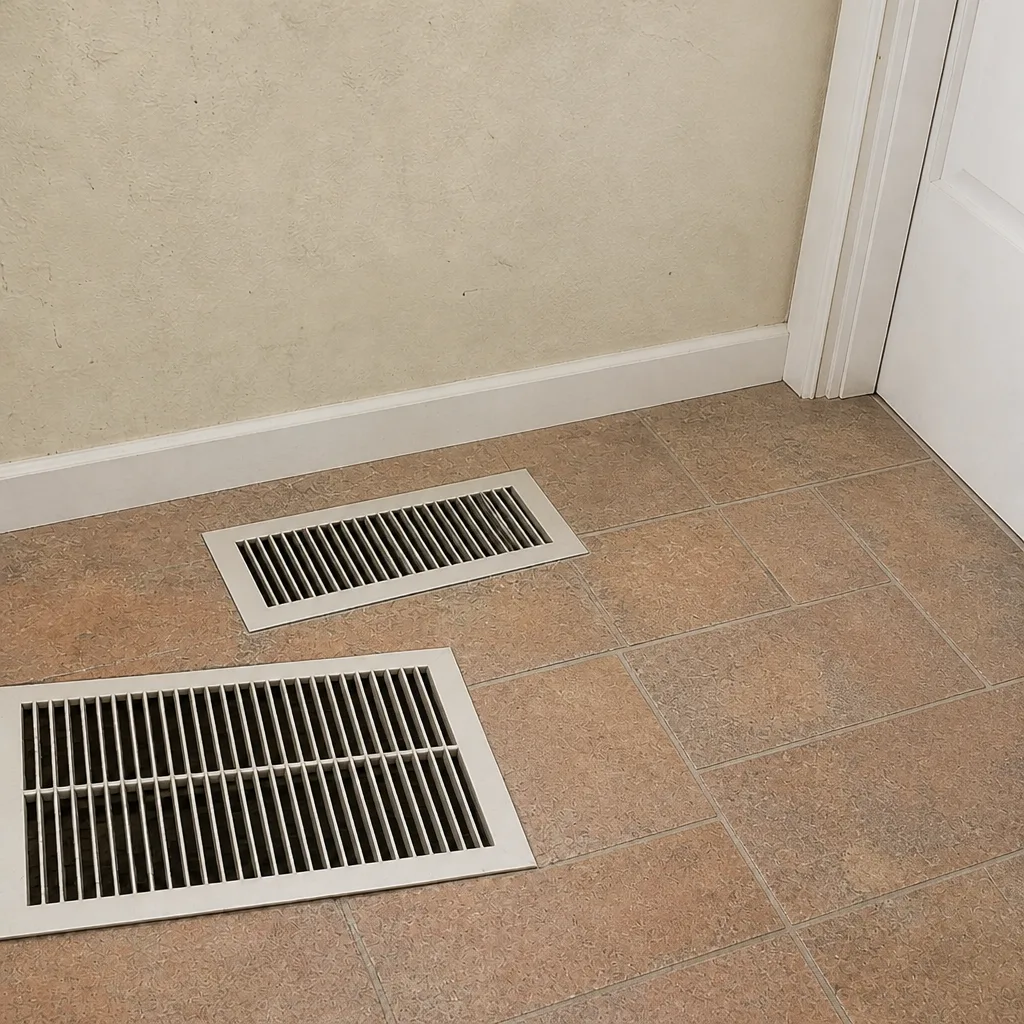 After
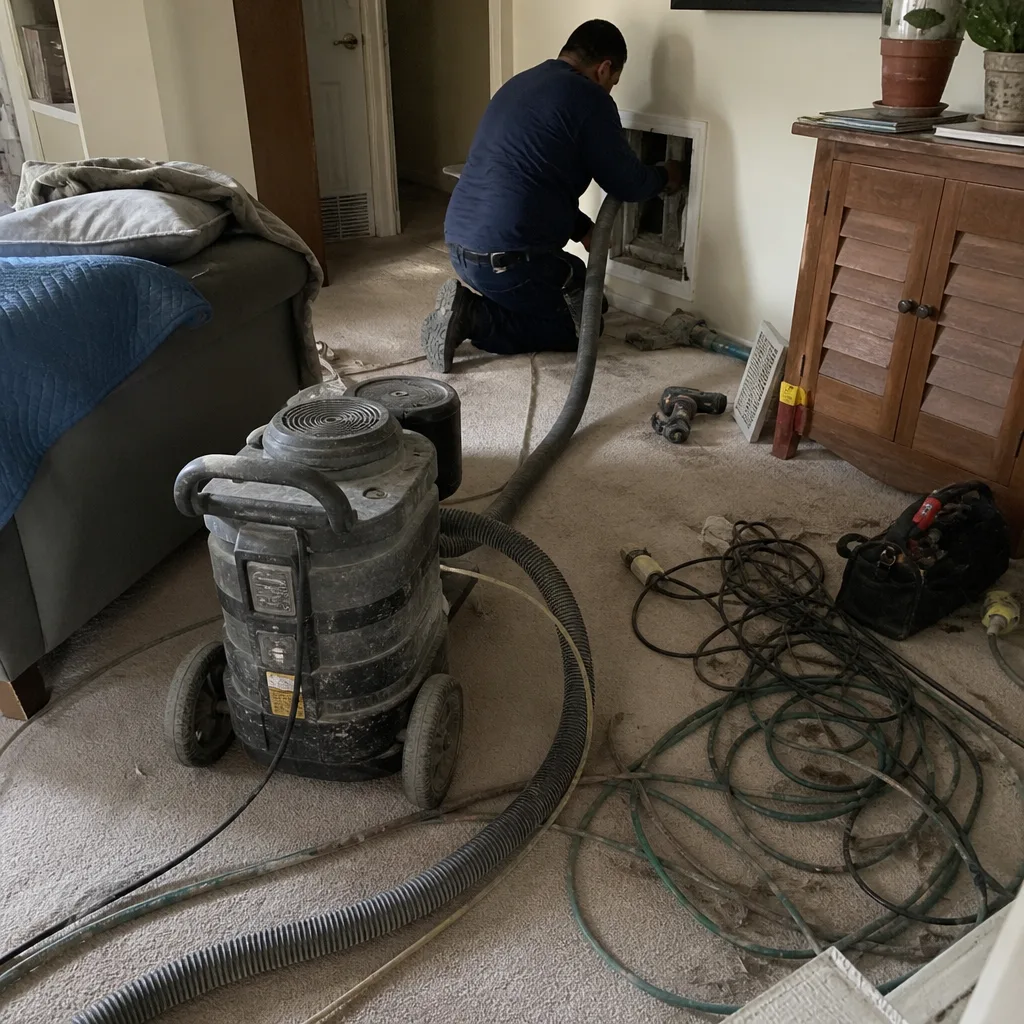 Before
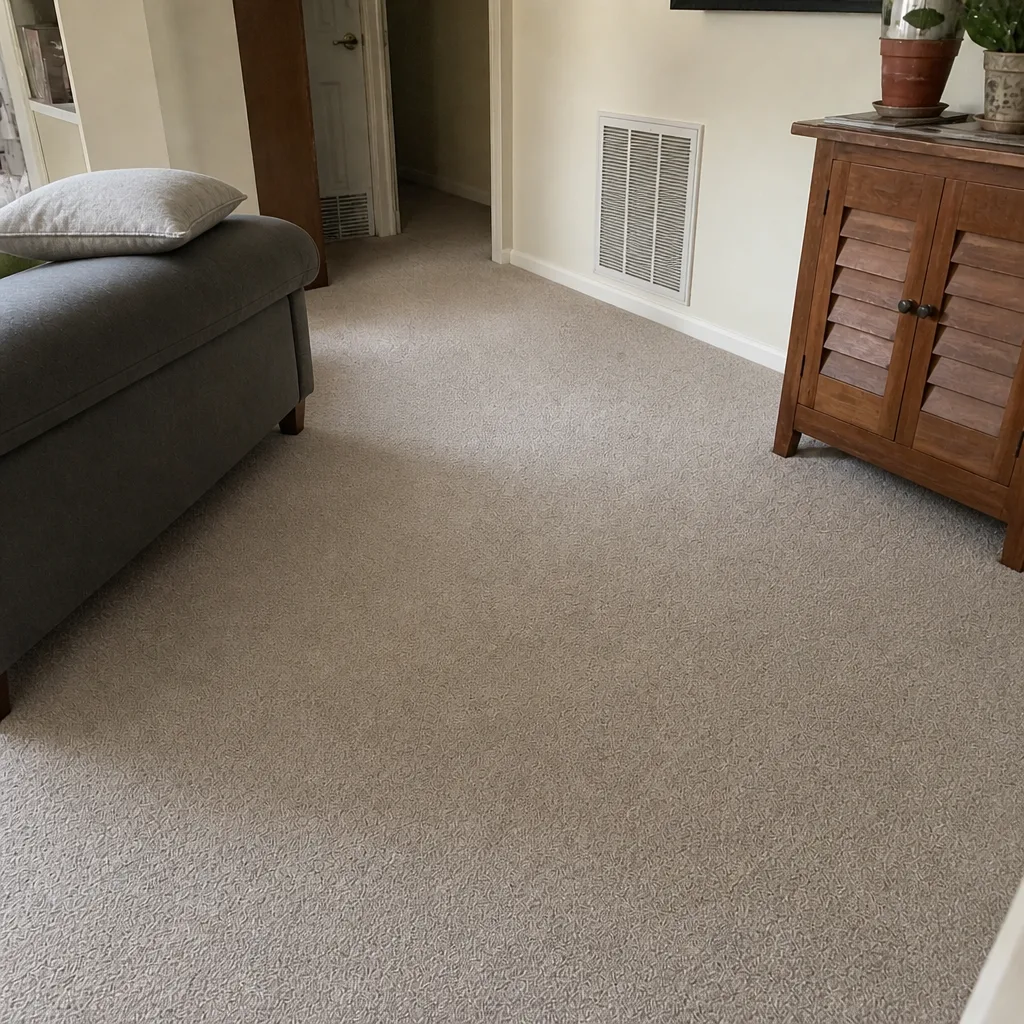 After
The Bottom Line
Most air duct problems in French Park trace back to duct-system faults, not dirt, and the fix depends on which fault you’re facing. Uneven airflow points to a branch-level problem; odor points to moisture, growth, or a return-side source; fast-returning dust points to filtration or a leak; high energy bills point to leakage in attic runs. Cleaning addresses contamination. Sealing and repair address the root causes. The correct order is diagnose, clean, seal, sanitize if needed, with a camera inspection before any cleaning tool is inserted. If you take one thing from this guide, take that sequence.
Get a Free Estimate in French Park
If you’ve read this far and your complaint maps to one of the categories above, a free estimate is the fastest way to know what’s actually wrong. Air Duct Cleaning French Park walks the diagnostic sequence on every job: camera inspection, pressure readings, written scope, then the right service in the right order. Our technicians have up to 10 years of experience, and every job uses professional-grade Rotobrush rotary-brush and Nikro HEPA-rated equipment. Call today and describe what you’re noticing in French Park. We answer 24/7. Fast dispatch from 7am to 7pm, Sunday through Friday. Free estimates, one flat price per system agreed before work starts.
Call (833) 509-5212 for your free estimate.
Written by the team at Air Duct Cleaning French Park.